
St. Josemaria Escriva de Balaguer
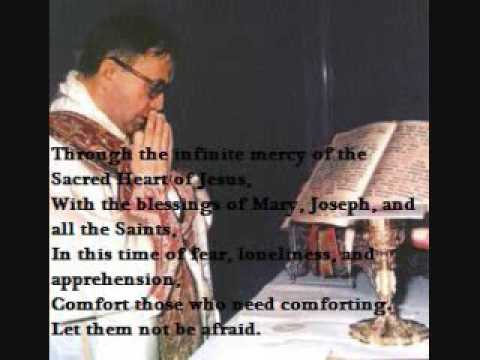

Facts
Birth: January 9, 1902
Death: June 26, 1975
Beatified: May 17, 1992, by Pope St. John Paul II
Canonized: October 6, 2002, by Pope St. John Paul II
Author and Publisher - Catholic Online
Printable Catholic Saints PDFs
Shop St. Josemaria Escriva de Balaguer

St. Josemaría Escrivá de Balaguer was a Spanish Catholic priest, spiritual writer, and founder of Opus Dei. Best known for his teachings on the universal call to holiness, he encouraged ordinary men and women to grow closer to God through their daily work, family responsibilities, and everyday activities. His life and teachings remind the faithful that holiness is not reserved for priests or religious, but is a calling shared by every Christian.
Early Life and Childhood
Josemaría Escrivá was born in Barbastro, Spain, on January 9, 1902, the second of six children born to José Escrivá and María Dolores Albás. Raised in a devout Catholic household, he developed a deep appreciation for prayer, frequent Confession, Holy Communion, devotion to the Blessed Virgin Mary, and charitable service to others.
Although he was known for his cheerful and outgoing personality, his childhood was marked by considerable hardship. Three of his younger sisters died, and his father's business suffered financial difficulties that eventually led to bankruptcy. These experiences helped shape his understanding of suffering, perseverance, and trust in God's providence.
In 1915, the family moved to Logroño, Spain, where his father had found new employment.
His Calling to the Priesthood
In 1918, Josemaría began to sense that God was calling him to a special mission, although he did not yet understand what that mission would be. Believing that the priesthood would allow him to dedicate himself fully to God's will, he entered religious studies, first in Logroño and later in Zaragoza.
At his father's suggestion and with the permission of his seminary superiors, he also pursued studies in civil law.
Josemaría was ordained a priest on March 28, 1925. He began his pastoral ministry in a rural parish before continuing his priestly service in Zaragoza.
In 1927, Father Josemaría moved to Madrid to pursue advanced studies in law. Following his father's death in 1924, he assumed responsibility for supporting his mother and surviving siblings.
Despite financial struggles, he devoted himself to serving the poor, the sick, and children. He also ministered to university students, laborers, and professionals, encouraging them to recognize their Christian responsibility to serve others through practical acts of charity.
The Founding of Opus Dei
On October 2, 1928, while attending a spiritual retreat in Madrid, Father Josemaría experienced what he understood to be a divine calling to establish Opus Dei, a Latin name meaning "Work of God."
The mission of Opus Dei was to help people from all walks of life pursue holiness through their ordinary circumstances, professional work, family commitments, and service to others.
Father Josemaría taught that Christians did not need to withdraw from the world to become saints. Instead, they could encounter God through their daily responsibilities, performing even the simplest tasks with love, integrity, and dedication.
In 1930, he extended the apostolic work of Opus Dei to women, emphasizing that both men and women were equally called to holiness and participation in the mission of the Catholic Church.
This understanding of Christian life became the foundation of his priestly ministry and spiritual teachings.
Religious Persecution and the Spanish Civil War
The growth of Opus Dei was interrupted by the outbreak of the Spanish Civil War in 1936. During this period, the Catholic Church in Spain experienced widespread religious persecution, and many priests and religious were killed.
Father Josemaría endured considerable hardship as he sought to continue his priestly ministry under dangerous circumstances.
Despite these difficulties, he remained committed to his vocation and the spiritual mission entrusted to him.
After the war ended in 1939, he traveled throughout Spain, leading spiritual retreats for priests at the request of local bishops. Opus Dei gradually expanded beyond Madrid into other Spanish cities and eventually began spreading internationally following the Second World War.
Although its message of holiness through ordinary life was unfamiliar to some, Father Josemaría continued to promote it through his preaching, spiritual direction, and personal example.
Spiritual Writings and Teachings
St. Josemaría Escrivá became a prolific spiritual writer whose works have been translated into numerous languages and read by Catholics throughout the world.
An early version of his best-known book, The Way, appeared in 1934 under the title Spiritual Considerations. An expanded edition was published as The Way in 1939, offering short reflections intended to help readers deepen their relationship with Christ.
His other notable spiritual writings include:
- Holy Rosary
- The Way of the Cross
- Christ Is Passing By
- Friends of God
- Furrow
- The Forge
His writings emphasize the importance of prayer, personal sacrifice, humility, devotion to the Blessed Virgin Mary, frequent reception of the sacraments, and the faithful fulfillment of everyday responsibilities.
A central theme throughout his works is that holiness can be achieved through ordinary life when every action is offered to God with love.
The Growth of Opus Dei
In 1943, Father Josemaría founded the Priestly Society of the Holy Cross, which made it possible for members of Opus Dei to receive priestly ordination. The society also provides spiritual formation and support for diocesan priests.
Recognizing the international mission of Opus Dei, he moved to Rome in 1946 to remain close to the Holy See and oversee the organization's continued development.
In 1948, married people were admitted as full members of Opus Dei. In 1950, the Holy See approved provisions allowing non-Catholics and non-Christians to become cooperators, supporting its charitable and educational initiatives without becoming members.
Under his leadership, numerous educational, professional, medical, and social initiatives were established, including universities, schools, agricultural training centers, hospitals, and clinics.
These initiatives reflected his conviction that Christian faith should inspire meaningful contributions to society and service to those in need.
In 1982, following his death, Pope St. John Paul II established Opus Dei as a personal prelature of the Catholic Church.
The Second Vatican Council
During the Second Vatican Council, held from 1962 to 1965, St. Josemaría Escrivá welcomed the Church's renewed emphasis on the universal call to holiness and the importance of laypeople in the mission of the Church.
These themes closely reflected the spiritual teachings he had promoted since founding Opus Dei in 1928.
He encouraged the faithful to recognize that their baptism called them to participate actively in the life and mission of the Church, regardless of their profession, social circumstances, or state in life.
He worked to incorporate the teachings of the Second Vatican Council into the spiritual formation offered through Opus Dei.
Final Years and Death
Between 1970 and 1975, St. Josemaría traveled throughout Europe and Latin America, meeting with large gatherings of Catholics and offering spiritual guidance.
He spoke frequently about love for God, devotion to the sacraments, Christian family life, and the importance of finding holiness through ordinary work.
By the time of his death, Opus Dei had developed into an international institution with a presence across several continents.
St. Josemaría Escrivá died suddenly in Rome on June 26, 1975, at the age of 73.
Following his death, bishops, priests, religious, and laypeople from around the world petitioned the Vatican to open his cause for beatification and canonization.
Beatification and Canonization
Pope St. John Paul II beatified Josemaría Escrivá on May 17, 1992, during a ceremony in St. Peter's Square.
His cause for canonization advanced following the Church's recognition of a miraculous healing attributed to his intercession. The approved miracle involved the healing of Dr. Manuel Nevado Rey, a Spanish physician suffering from severe cancerous chronic radiodermatitis.
On October 6, 2002, Pope St. John Paul II formally canonized Josemaría Escrivá in St. Peter's Square, proclaiming him a saint of the Catholic Church.
During the canonization Mass, the Holy Father emphasized the enduring importance of St. Josemaría's message that everyday activities, including professional work, can become opportunities for sanctification through God's grace.
Feast Day and Spiritual Legacy
The feast day of St. Josemaría Escrivá is celebrated on June 26, the anniversary of his death.
His spiritual legacy continues to inspire Catholics seeking to deepen their faith while fulfilling the responsibilities of work, marriage, parenthood, education, and service to their communities.
St. Josemaría taught that prayer and everyday life should not exist separately. Rather, the Christian's relationship with God should influence every aspect of life, transforming ordinary responsibilities into opportunities for spiritual growth.
His life reminds the faithful that sainthood is not beyond the reach of ordinary people. Through prayer, the sacraments, charity, and dedication to God's will, every person can pursue holiness in the circumstances of their own life.
Prayer to St. Josemaría Escrivá
O God, who called St. Josemaría Escrivá to proclaim the universal call to holiness, grant us, through his intercession, the grace to discover Your presence in our daily lives.
Help us to perform our work with love, fulfill our responsibilities with faithfulness, and serve others with generosity and humility.
May we grow closer to Christ through prayer, devotion to the sacraments, and the ordinary duties of each day.
Through the intercession of the Blessed Virgin Mary, guide us toward a life of holiness and faithful service to Your Church.
Amen.
St. Josemaría Escrivá, pray for us.

Come Grow With Us
Sign up and walk the Catholic journey with millions around the world.
Receive inspiring emails on saints, daily readings, and free faith-building resources—no cost, ever.
What If Your Gift Could Change a Life Forever? This Giving Tuesday, it can...
- 7 Morning Prayers
- Mysteries of the Rosary
- Litany of the Bl. Virgin Mary
- Popular Saints
- Popular Prayers
- Female Saints
- Saint Feast Days by Month
- Stations of the Cross
- St. Francis of Assisi
- St. Michael the Archangel
- The Apostles' Creed
- Unfailing Prayer to St. Anthony
- Pray the Rosary



Copyright 2026 Catholic Online. All materials contained on this site, whether written, audible or visual are the exclusive property of Catholic Online and are protected under U.S. and International copyright laws, © Copyright 2026 Catholic Online. Any unauthorized use, without prior written consent of Catholic Online is strictly forbidden and prohibited.
Catholic Online is a Project of Your Catholic Voice Foundation, a Not-for-Profit Corporation. Your Catholic Voice Foundation has been granted a recognition of tax exemption under Section 501(c)(3) of the Internal Revenue Code. Federal Tax Identification Number: 81-0596847. Your gift is tax-deductible as allowed by law.